How we create content that converts
This page details Pillar 02 (Content) of the Makewell Framework. Every piece of content we produce comes from a proprietary framework that crosses the greatest minds in world advertising with applied neuromarketing — this is how we separate ordinary content from content that builds brands and drives results.
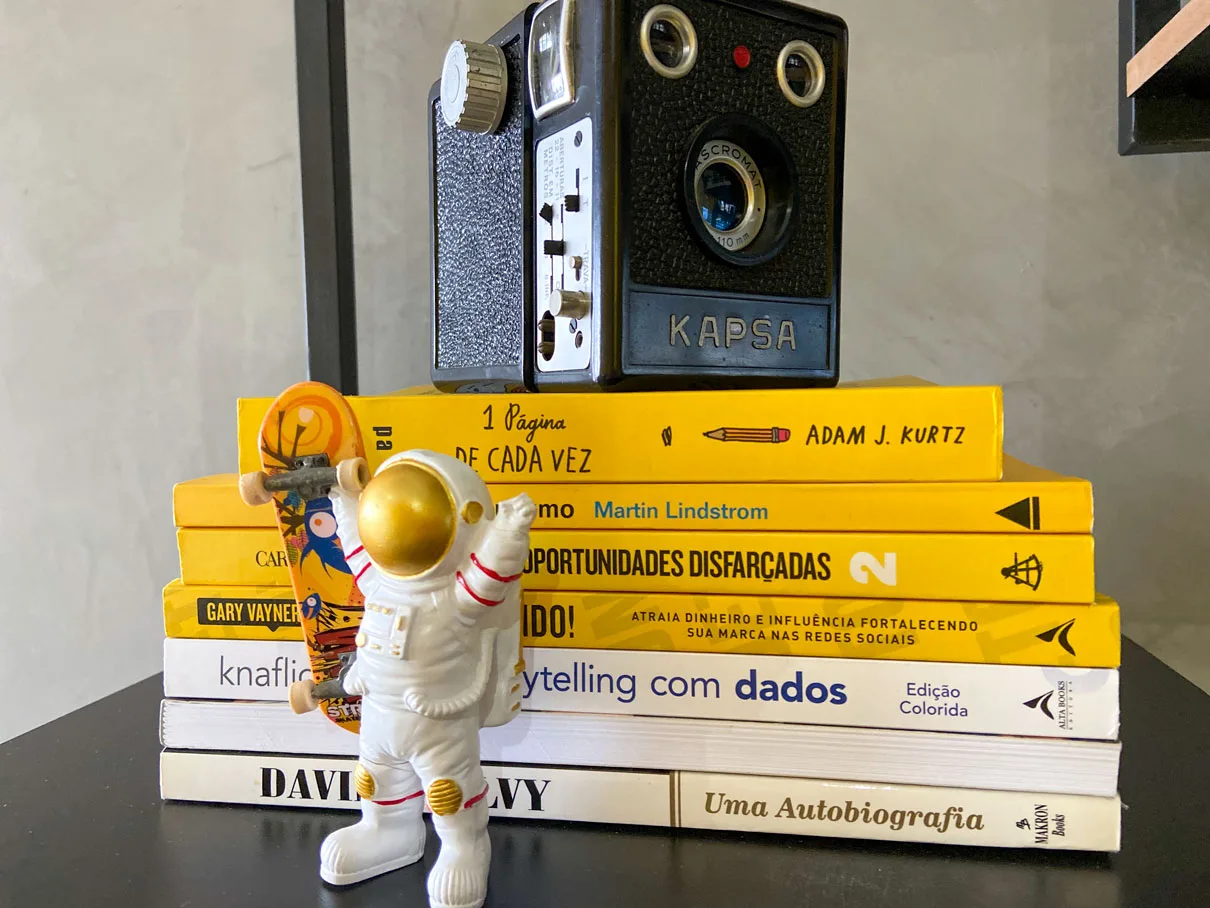
The 4 pillars of the great minds
By studying David Ogilvy, Washington Olivetto, Philip Kotler, Seth Godin, Simon Sinek and Brazil's leading digital strategists, we found clear patterns that separate ordinary content from content that converts.
The Magnetic Purpose
Content cannot start with the product ("The What"). It must start with the belief ("The Why"). Simon Sinek proved that the limbic brain, responsible for emotions and decision-making, does not understand technical language — but responds deeply to purpose. Seth Godin complements with the Purple Cow: if your "Why" is not remarkable and different, you will be ignored.
The Science of selling and facts
David Ogilvy, the father of modern advertising, said: "the more facts you tell, the more you sell." He abhorred advertising that wanted to be just "art" without generating sales. Brazil's biggest digital marketing cases echo the same principle: advertising only accelerates what already works; if the journey, price and product are poor, marketing only exposes the problem faster.
Culture, humor and emotion
Washington Olivetto and Nizan Guanaes revolutionized advertising by understanding that people don't just want to buy: they want to be entertained and see themselves reflected in the brand. They used intelligent humor, elements of local culture and engaging narratives to create immortal campaigns.
Conversion Engineering
Classic advertising built brands over the long term. Digital brought conversion engineering. Érico Rocha taught the market to create peaks of desire through logical content sequences (education → anticipation → offer). Pedro Sobral taught that the best content in the world dies without the correct distribution of paid traffic.
Applied neuromarketing: how the brain decides
Martin Lindstrom, in Brand Sense and Buyology, proved that purchasing decisions are emotional — and then rationally justified. To create content that converts, we need to activate the right mental shortcuts (triggers).
| Mental trigger | How the brain reacts | Content application |
|---|---|---|
| Social Proof | "If others trust it, it's safe." | Success cases, video testimonials, number of clients served. |
| Authority | "He knows what he's talking about, I'll follow." | Show behind-the-scenes, proprietary method, firm language and concrete data. |
| Scarcity / Urgency | "I might miss this opportunity." | Limited slots for diagnosis, cart closing countdown. |
| Reciprocity | "He helped me, I want to give back." | Dense, free content that solves a real client problem. |
| Story (storytelling) | "I identify with this journey." | Tell the hero's journey (the problem, the discovery of the solution, the result). |
The M.I.N.T.E. framework
To ensure every Makewell team member always creates at the great minds' standard, we developed a five-step checklist. No content leaves the studio without going through this.
(Sinek / Godin)
(Olivetto / Lindstrom)
(Guanaes)
(Ogilvy / Rocha)
The team behind the method
Our framework only works because every piece of content passes through hands that understand strategy, aesthetics and results.
Makewell creation team
Hayana · Gabriel · Daniel · Jeferson · Lucas
Want this standard applied to your brand?
Schedule a free diagnosis and we'll design your strategy.
Talk to the team →